



Silhouettes
Silhouettes profiles Grant Mehlich
 August 18, 2017 |
  Author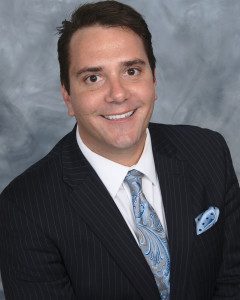
Grant Mehlich
By: Tiffany Razzano
This article appeared in the Aug. 4, 2017 edition of La Gaceta
When Grant Mehlich landed in Tampa in 2006, he only knew one person in the area.
Born on the East Coast of Florida in the small beach town of Stuart, just north of West Palm Beach, he headed to Tallahassee to study at Florida State University after high school. From there, once he earned a degree in economics and finance, he went to New York City for three years.
He’d only visited Tampa once before, for Gasparilla. “So Tampa wasn’t even on [his] radar” when he began thinking about his next move. “But I came and visited my friend and really fell in love with it,” he said.
He took a job with a large insurance brokerage firm in Tampa. Mehlich knew he needed to find a way to meet new people, so he turned to the best place he knew for that: FSU’s alumni association.
He joined the Tampa Bay Seminole Club, the alumni association’s local offshoot. “I wanted to meet more people and obviously, being a Seminole, one thing we all have in common is we all love our school,” he said. “If you’re a graduate of FSU, you love your school.”
He became heavily involved with the club immediately – today, he’s club president – and founded one of its signature events, the Tampa Noles Block Party. “Our job is to promote FSU in the community and raise awareness,” he said. “One thing we’ve done really well is throw this block party.”
This year’s event is set for Saturday, Aug. 12. Check-in starts at 2 p.m. at the Italian Club and takes place at 18 venues spanning four city blocks. “We go all night long,” Mehlich noted. The club expects around 4,000 attendees.
He added, “When you look at it from an economic development standpoint, we’ve injected over $1 million into the Ybor City community [since it first started]. Many of the bars tell us it’s one of their largest days, of the year in sales, and even rivals Gasparilla.”
Regular tickets are $25 and tickets the day of the block party are $40. Since its inception, the event has raised more than $400,000 for local scholarships through ticket sales. “Everything we collect literally goes to local students,” Mehlich said.
Last fall, the Tampa Bay Seminole Club donated $50,000 to the FSU CARE program. It was the largest single donation in the club’s history and it was also the largest single donation to CARE through its matching grant program. “The really cool thing about this program is it was earmarked and matched by the state dollar for dollar,” he said. So because of the club’s efforts, the CARE program received $100,000. The donation funded 33 scholarships for students from Hillsborough County to attend FSU.
CARE, which is an acronym for the Center for Academic Retention & Enhancement, assists first-generation, low-income and predominantly minority students attending FSU. Many of them are high-risk students as well, Mehlich commented. He added, “Some of these low-income students don’t have that support mechanism, they don’t have families, some are, in fact, homeless and at high risk of dropping out.”
So CARE does more than simply fund their education, it serves as a support system throughout their four years at FSU. “This really sees them through the entire process,” he noted. “The program has a 90 percent graduation rate. It’s astronomical and fantastic what it does. It’s just an amazing program.”
He learned about CARE through a FSU-sponsored leadership conference. “It really struck a chord with me,” he said. “It was never on my radar until then. We’re really impressed by it. It’s such an incredible program and I was shocked to even find out about it.”
Tampa Bay Noles Club also has its own, separate, $250,000 scholarship endowment that it uses to support FSU students from the Tampa Bay area.
The club’s fundraising efforts caught the eye of the local University of South Florida alumni chapter. Last year, the USF group approached the Noles for assistance with creating their own pub crawl block party to serve as a scholarship fundraiser.
“Obviously, we’re in USF’s backyard and outnumbered by them 4 to 1,” Mehlich said. The USF chapter is hosting its second block party a week after the Noles on Saturday, Aug. 19. “There’s a friendly rivalry, but from a scholastic standpoint, we have no problem helping them out.”
He added, “[University of Florida] might be a different story. I don’t know if I’d be as helpful to them as I was with USF.”
The Tampa Bay Seminole Club, which taps into the nearly 20,000 FSU alumni in the area, hosts a number of other events throughout the year from networking meetings to game-watching parties at area bars, including Gaspar’s Grotto. The group also recently launched Tampa Noles Ladies Night Out at a South Tampa Painting With a Twist, which drew a number of female FSU graduates and their families.
Mehlich is involved in the community in other ways, as well.
These days, he operates his own company, GCM Insurance & Risk Management, which he founded in 2009 based in Ybor City, “I could not have picked a worse time to start a business,” he said. “It was the height of the economic recession, my mother got sick, and this all happened in six months. I had a lot on my plate. But I could not have had a more rewarding experience.”
He also lived in Ybor City at the time, his love affair with the historic district dating back to his early days in Tampa. “I thought I was going to move to South Tampa, where all the action is,” he said. “By chance, I took a wrong turn and discovered Ybor City and fell in love with it.”
Though he now lives in Seminole Heights, he remains a major proponent of Ybor City, where GCM is still located. He’s also on the board of the Ybor City Development Corporation (YCDC), which he currently serves as treasurer. “I’m essentially the treasurer of Ybor City. We manage the CRA funds for the area on behalf of the City of Tampa,” Mehlich said.
He’s proud of the YCDC’s long-term planning for the district and said the group is starting to see the results of its efforts. “We really organized in helping Ybor through the transition. With the downturn in 2009, 2010, Ybor City was struggling,” he said.
There are a number of new businesses and development projects planned in the neighborhood that will really transform it and “change everyone’s perception of what Ybor City is.”
The area has already changed significantly since he first moved there in 2006. “When I decided to move to Ybor, people thought I was crazy,” he said. “Friends said, ‘You’re literally crazy.’ This was pre-transition [into what the district is today].’”
He added, “Now, some of these people are moving into Ybor or I see them every weekend here. It’s really cool to see the accomplishments we’ve had.”
 Posted in
Silhouettes profiles Donna Lusczynski
Silhouettes
By Tiffany Razzano
Originally published April 21, 2017
As a child growing up in New Jersey, Donna Lusczynski never dreamed of a career in law enforcement. But that’s where she ended up, eventually serving the community as a colonel in the Hillsborough County Sheriff’s Office. She’s the first woman to hold the rank, which she considers an honor.
Initially, Lusczynski was drawn to marine biology and thought one day she might work with dolphins.
After graduating from high school, she looked into marine biology programs in Maine and Florida. Ultimately, she decided to move to an area with warmer weather and attended the University of Tampa.
Lusczynski was also mildly interested in criminology. “So I took those courses along with my marine biology ones,” she said.
After several years at UT, she realized it was unlikely she would land her dream job. “I was thinking Sea World at that point, but it was difficult to get into without a lot of connections and further schooling,” she said. So she switched her major to criminology.
During her senior year, she interned with the Tampa Police Department to ensure that law enforcement was the right path for her. “Immediately, I got hooked,” she said, “and I realized I wanted to pursue it. The more I was immersed in it, the more I really felt a connection.”
She was hired by the sheriff’s office and began attending the police academy before UT’s graduation ceremony took place.
She started off as a patrol officer before joining the Street Crimes Unit, the lower-level drug crime unit in the sheriff’s office. She worked undercover in the University of South Florida area. After eight months, she became a detective and moved up to the narcotics and vice squads. “We were trying to target higher-level dealers, not just those selling on the street corners,” Lusczynski explained. “We worked to identify drug organizations and take those people off the streets.”
She also did some undercover prostitution work with the vice squad. She worked in narcotics and vice from 1994 to 2000.
That’s when she was promoted to corporal and moved to internal affairs. It was an entirely different animal compared to narcotics and vice cases
“It was a big challenge because it was completely different,” she said. “With narcotics and vice, you’re essentially committing a crime for a better purpose. In internal affairs, you’re investigating the behavior of other personnel. It was a challenge, but it was a great experience for my career. I got to deal with all areas of the office and it helped me get a bigger view of the total operation of our agency.”
She earned her stripes as sergeant and moved to the Juvenile Services Section of the Criminal Investigations Division in 2004. From there, she moved into the newly created Child Protective Investigations Division. “We started that from the ground up,” she said.
The sheriff’s office took over operations from the State Department of Children and Families. Lusczynski and her team set up the new division’s structure and processed and hired its staff. “It was a complete start-to-finish operation,” she said. “Again, it exposed me to a lot of the administrative tasks and allowed me to set up a division from the very bottom to completion.” While there, she was promoted to lieutenant.
Eventually, she was promoted again, to the rank of captain, and assigned to Patrol District III. “I hadn’t been [on patrol] in a while, so it was good for me,” she said.
She was then promoted to the rank of major and became the division commander of the Special Investigations Division, which brought her back to her early career work in narcotics and vice. “I was very familiar with that,” Lusczynski noted.
When a colleague retired, she then took over the Criminal Investigations Division as commander. In this division, she handled a variety of cases – juvenile, homicide, violent crimes. “It exposed me to even more areas I hadn’t been intimately involved with,” she said.
She went on to receive a master’s degree in public administration from Troy State University. She also trained with the prestigious FBI National Academy, a leadership course for local law enforcement.
In 2012, she was promoted to colonel and became commander of the Department of Investigative Services, overseeing Special Investigations, Criminal Investigations and Child Protective Investigations Divisions. “I was fortunate to have already worked in each of those three areas,” she said.
On a daily basis, she works closely with the majors of these divisions “to make sure administratively they have what they need,” she said. “I also respond out on major homicides or significant cases.”
Two cases stick out in her mind, both homicides in the affluent community of Avila in North Tampa. One took place on Super Bowl Sunday, she recalled. An employee for a couple living in the community robbed the wife and killed the husband. “It was a high-profile incident,” Lusczynski said. “We didn’t know he was involved, initially. It took a lot of great work to figure it out.”
The second case involved a father murdering his two children and his wife before setting their home on fire. “That was a very public case as well,” she said. “Not just because of the manner in which he did it, but because the house was owned by a former tennis player. It was a very disturbing scene. Anytime you have a father kill his children, it’s horrible.”
She added, “They were both pretty brutal crimes.”
Working in law enforcement can be a challenge mentally, Lusczynski said. So she tries to focus on the positive.
“I just remind myself that the work that we’re doing provides some justice to the families and the victims. We take the reins, take hold and do the best we can so we can provide some peace in this horrible time,” she said.
She added, “There’s a lot of good out there. I see the good my detectives do. I see the positive. I don’t want it to seem dark and dreary. We help people and children and that’s what’s important to us.”