




Author Archive
Silhouettes profiles Lisa Moore
 February 13, 2026 |
  Author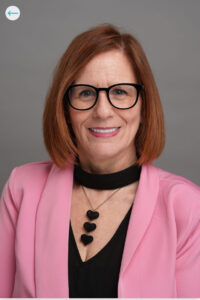
Lisa Moore
Published Jan. 30, 2026
Bronx native Lisa Moore dreamed of opening a bagel store as a teenager. For her first job, she worked at a bagel shop and loved it. “I thought, ‘Oh, this is going to be what I build,’” she said. “Then I learned the bakers have to wake up at 3 in the morning and realized, ‘Oh, not for me.’”
Still, Moore loved the hospitality industry, and, thinking she might become a restaurant manager, studied restaurant and hotel management at Westchester Community College.
When she was 24, she met her soon-to-be husband during a July 4th weekend trip to Virginia Beach. He had five more months left serving in the U.S. Navy, and when his military career ended, he briefly moved to New York with her before the couple gave El Paso, Texas a try. “That was a completely different ballgame,” Moore said.
They lasted four months there before relocating again, landing in Tampa, where they’ve spent the last 30 years and raised their two children.
After their move to the area, Moore took a job with Applebee’s on 56th Street. She became the trainer for the store, working with everyone from management to bartenders and waitresses.
Moore wanted a family, though, and knew working in the restaurant industry wouldn’t be ideal for that. “So, I decided to get out of the restaurant business,” she said.
From there, she spent over six years as the restaurant manager for the Museum of Science and Industry. During her time at MOSI, she worked with the food and beverage director to launch its catering program.
Then her infant son fell ill with chronic sinus issues and she left her job for about a year to focus on his health.
When Moore returned to work, she took a job as catering sales manager for what is now ZooTampa at Lowry Park and also ran one of the restaurants at the zoo. “I loved every minute of it,” Moore said. “I got to think out of the box. We did 50 weddings a year.”
By the time she left the zoo, she was doing the work of five people and burned out. “Still, I loved working at the zoo. It was one of my favorite jobs in the world,” she said.
From there, she decided to move into the hotel business, thinking she might be able to get more steady work hours, “on the sales side of things and not the operations side,” she said.
Moore was hired to work in sales for a Clarion Hotel in the Westshore area. An older hotel, it closed and she took a sales manager position at a Clarion on Fowler Avenue. She spent two-and-a-half years there and during that time, moved into a senior sales manager role.
Moore loved the work but decided it was time to move on to something new, landing a sales role in the brand new La Quinta Inn & Suites Tampa North on Fletcher Avenue. “It opened in the recession of 2009 when everyone was struggling and laying off people left and right,” she said. She was only there for about a year when the owner decided to sell the struggling hotel.
Then Moore was approached by the owner of the Fairfield Inn & Suites down the street and became its director of sales for two years. After learning that hotel would be sold, she was recruited to serve as director of sales for the nearby Springhill Suites on Bruce B. Downs Boulevard, which had only been open for about a year at that point.
After five-and-a-half years, the hotel’s parent company – Sun Development & Management Corporation out of Indianapolis – tapped her to help with other hotels for the company and named her a regional director of sales.
While she oversaw sales for a number of hotels in Florida for the company and across brands, including Marriotts and Hilton Garden Inns, Moore also handled properties in other states, such as Georgia and New Jersey.
Eventually, the company sold off several of the hotels she oversaw and asked her to relocate to New Jersey, which she turned down. “I was not feeling the cold,” Moore said.
In 2018, she moved over to the Hilton Garden Inn in Wesley Chapel and the nearby Hampton Inn & Suites. It wasn’t long before she was also overseeing sales for a Hilton Garden Inn in Orlando, near the University of South Florida, and was named regional sales director by the parent company, Emerald Hospitality Associates.
It was through this role that Moore was encouraged to become heavily involved in the community, which she found was a natural fit for her. “They’re very big on being out in the community,” she said.
As the Hilton Garden Inn’s community liaison, she joined the Rotary Club of Wesley Chapel, serving on the board for six years and taking on the president position from 2024 to 2025. She loved the club’s various service projects and events, including raising thousands of dollars for the Pasco County Fire Rescue and the Pasco Sheriff’s Office.
The funds were raised through various events – clay shooting, breakfast with Santa, and Halloween-themed events. The club gives back to the community in other ways, as well, including hosting annual Veterans Day luncheons at a Pasco County nursing home and partnering with a home for foster children for special outings, such as movies, ice skating, and holidays.
Moore has sat on the board for the New Tampa YMCA for the past four years and currently serves as the vice chair. “I have a passion for giving back and giving back to kids is really good for me,” she said.
She really stepped up for the board over the past year, helping to organize a casino night fundraiser at her hotel for the YMCA. Because of her work, she’s been named the organization’s Volunteer of the Year.
Moore has also been tapped to serve as the board chair for the new YMCA opening in Wesley Chapel this September.
She’s also heavily involved in the North Tampa Bay Chamber of Commerce. She’s been an ambassador for the organization for 14 years, sitting on the board for four and serving as the membership chair for three. “What I do as the membership chair is I look for members to join our chamber so we can help with their business,” she said. “I’m a connector. I love to connect people. I love networking.”
Moore was also asked to join the foundation guild for the John Hopkins All Children’s Hospital, slated to open in Wesley Chapel in 2027, and has since been named chair. She comes to the hospital with her own personal story to share as her son suffered from chronic sinus issues as a young child, enduring everything from tubes in his ears to having his tonsils and adenoids removed. Eventually, it was a surgery at John Hopkins that cured him, she said.
She also serves as an ambassador for Metropolitan Ministries.
Between work and these various organizations, Moore is constantly on the go. “I’m very busy, but I love it,” she said. “If I wasn’t busy, I wouldn’t know what to do with myself.”
 Posted in
Silhouettes profiles Jane Hernandez

Jane Hernandez
Published March 7, 2025
As a University of Tampa graduate, one of Jane Hernandez’s greatest passions is the restoration and preservation of the Henry B. Plant Hall on campus.
For the past 16 years, she’s been a member of The Chiselers, an organization that was founded in 1959 and is dedicated to raising funds – hundreds of thousands of dollars each year – to restore the historic building, and now serves as the group’s president.
Plant Hall was initially built between 1888 and 1891 by railroad magnate Henry B. Plant as the Tampa Bay Hotel. Today, it’s home to classrooms, UT administrative offices and the Henry B. Plant Museum, and is a designated National Historic Landmark.
“That building, while the university is living there, using it, it belongs to the city of Tampa. We all have a lot of love for that building,” she said. “People stop in front of it, take photos outside it. Tour buses pass it. It is a landmark for us living here and you just wouldn’t want to see anything happen to it.”
The organization’s signature annual fundraiser, the Chiselers Market at Plant Hall, kicks off March 14 with presale access with the market open to the public on March 15. Bidding on a companion online auction starts March 8.
When they were young teens, Hernandez’s parents – her father from Detroit, her mother from Knoxville – moved to Tampa, where they met and eventually married. A graduate of Hillsborough County Public Schools, she has spent her entire life living in South Tampa.
Her father was a banker and she worked in banking while studying political science at the University of Tampa. After earning her degree, she worked briefly for Seminole Electric Co-op before returning to banking, taking a job at the Bank of Tampa.
Hernandez spent 28 years with the Bank of Tampa, mostly in employee communications, before retiring in 2022.
She learned about the Chiselers through her work at the bank, which encouraged employees to be involved in the community. A coworker and friend who was a member of the group told her about it. “She said, ‘I think you’d be really interested in this,’” Hernandez said. “So, I started volunteering and felt, yeah, this is a good home for me.”
The organization aligned with her love for the University of Tampa and the city’s rich history. “I love the school and felt passionate about how important that building was – not just to the university, but to the city of Tampa,” she said. “It’s a symbol of the city and what got this city started.”
The Chiselers work closely with the university “to make sure nothing happens to” Plant Hall.
Work on the historic building is “just unending – like any old house,” she added. “The building is ¼-mile long, five stories high and over a hundred years old. It’s got a lot of work that it needs.”
Hernandez anticipates that about $140 to 150 million will be needed to complete all the work that needs to be done in the next 10 to 20 years. “The tough thing is you can’t close the building, even if you could raise all that money at once,” she said. “Projects have to be done in a manner that can keep the building going and working. We do projects that affect one area at a time to keep things going each year.”
Currently, critical foundation work is being completed at Plant Hall. The project is funded by two Hillsborough County grants totaling about $375,000 and additional funds from the Chiselers to bring the total amount to $1 million.
Another major project on the horizon is restoration work to the east veranda, which faces the Hillsborough River. “It’s so spectacular when you drive in and see that front facade,” Hernandez said. “There’s a ton of work there that needs to be done top down from the roof downspouts, which are inadequate and causing problems with intrusion.”
The floor’s decking is also “not pitched correctly and needs to be redone to take care of water intrusion,” she said. “That’s a real huge problem there for the building. We’re trying to solve all those kinds of issues. That’s why the money is as big as it is. We’re trying to get to the root and correct that and keep it going.
Last year’s Chiselers Market raised about $170,000 and the organization hopes to bring in just as much at its upcoming sale. The group collects donated items this year that are available to purchase at the market – everything from furniture and lamps to jewelry, books, and art to kitchenware and China. “We have a lot of silver this year, which is fabulous,” Hernandez said. “A lot of art, too. There’s really great fun things as far as collectibles.”
The online silent auction opens March 8 and people will be able to bid on specific items in the week leading up to in-person sale.
This is the first year the organization is offering a ticketed pre-sale access to the market. Tickets are $25 in advance and $35 at the door and allow people “to come in and shop before the crowds,” she said.
The Chiselers are also introducing a new fundraising event this year – Chiseling a Legacy, a dinner for preservation, on April 11. “It’s brand new. We haven’t done it before,” Hernandez said. “We felt we needed an opportunity to have an event where we could share with donors what is happening (at Plant Hall) and what is still needed and also thank them.”
Silhouettes profiles Angelique Lenox

Angelique Lenox
By Tiffany Razzano
Published Jan. 17, 2025
Born in the Bronx, Angelique Lenox was raised in a large family in York, Pennsylvania. As a girl, she dreamed of attending Howard University, a historically Black college in Washington, D.C., but she knew it would be difficult to find the money for it. “It just didn’t seem like it was adding up for me,” she said.
So, she eventually turned her sights on joining the military after high school graduation. “Education wasn’t cheap and I came from a big family and I knew my family wasn’t going to be able to really pay for that education,” Lenox said. “I had to look at other options and the military seemed like a great way to get that education.”
Initially, she enlisted in the U.S. Air Force, but the process was taking too long for her and she was eager to leave her small town. At the time she signed up, her recruiter told her it would take about a year-and-a-half years until she could leave for boot camp.
Then, one day, she happened to walk by a U.S. Marine Corps recruiter. He told her that if she wanted to leave sooner, he could make that happen for her. Lenox was sold on making the switch when the recruiter took her to see the Marine Corps Silent Drill Platoon, a 24-person precision drill team. “I was like, ‘Sign me up,’ oh my goodness,” she said. “It was just so impressive and so regal and I just thought, ‘I need to be a part of that.’”
She left for boot camp at Parris Island, South Carolina in August 1987. From there, she was assigned to the Marine Corps Air Ground Combat Center, also known as 29 Palms and eventually, Camp Pendleton in California. Among her duties were serving in communications support as a radio operator and an embarkation non-commissioned officer.
She was based in San Diego with the marines for five-and-a-half years and lived there for 15 years total.
After leaving the military, Lenox attended San Diego State University, where she studied speed communications. “I didn’t really know exactly what I wanted to do, I just knew that some form of communication was in my future; but I didn’t have it all figured out,” she said. “I gravitated to things that had to do with people. I liked communicating with people and I always wanted to leave people better off than when I first encountered them.”
Her time in the Marines prepared her well for entering the workforce, she said. “I got my work ethic from the Marine Corps, most definitely, because it taught me dedication. It taught me commitment. It taught me how to focus. It taught me how to dig in. It taught me mission. That work ethic from the military still serves me today.”
Lenox dreamed of being an actress, which also factored into her choosing to serve at Camp Pendleton. “San Diego is one step closer to Hollywood,” she said. She pursued entertainment after leaving the Marines, including community theater, extra work and roles in commercials. “I was even chosen to be in a well-known movie, but I was not able to do it because of some family commitments,” she said.
At the same time, she pursued her career in communications. Her father, a pipefitter, always told her, “Never do anything without a job,” she said. “Make sure you have a job. It’s all great to pursue your goals and dreams, but being a starving artist, I don’t think I could be that. Still, I never gave up on my dreams.”
She worked as a server at a restaurant and as a recruiter for a modeling agency. Lenox went on to work for a small independent news station in San Diego as a camera person on the 7 p.m. and 10 p.m. news programs.
From there, moved into producing news and marketing for KGTV, the local ABC station and started her own production company.
Lenox moved to Florida in July 2001 and continued to work in TV and radio, including MOR-TV in the Tampa Bay area and WESH in the Orlando area. She decided to go back to school in 2016 and earned a master of business administration from Argosy University while working full time for WFLA as a senior multimedia account executive.
After earning her MBA, she wanted to “put it to good use” and accepted a job with Vistra Communications, a marketing and public relations firm, as senior director of business development, a role she started in January 2020.
It was through this position that she got involved with the North Tampa Bay Chamber. Lenox, a member of the executive leadership committee, is in her fifth year serving on the board and earlier this month, started her term as the first Black woman to chair the chamber, a feat she’s incredibly proud of.
“What an honor to be the first Black woman to chair the North Tampa Bay Chamber and to know that I’m opening doors, opening awareness to show that we’re all human, all part of the community and we live our core values,” she said.
During her year leading the chamber, the organization will “stay committed to our core values,” she said. “We focus on collaboration, innovation, inclusivity and integrity. Those are our core values and we want to stay true to those. They’re also important to me.”
She hopes to focus on the entrepreneurial business community by creating a mentorship program for small business owners and start-up companies.
She also wants to get more nonprofit organizations involved with the chamber. Lenox feels that for-profit businesses and nonprofit organizations can better support each other and form mutually beneficial relationships.
This interest in area nonprofits led her to discover Tampa Family Health Centers, which serves “the uninsured, the underinsured and the underserved,” she said. She joined the organization’s team as vice president of marketing and new business development in December 2023.
The Tampa Family Health Centers work closely with local businesses, particularly in fields where many workers are uninsured, such as the hospitality industry. “So we support business communities by collaborating with them and educating them about our services,” Lenox said. “A lot of people don’t have insurance. They can come to us as a community health center and receive everything from family practice, senior care, dental services, pediatric care, women’s care. We do it all.”
She added, “We’re federally funded and we don’t turn anyone away.”
Community engagement is also key to her role with the nonprofit. “We try to get out there and let people know about our services, and see how we can collaborate and partner with (other businesses and organizations,)” she said.
The Tampa Family Health Centers has seen continued growth in the community since forming in the early 1980. The health care organization opened its first infusion center at the end of last year. “We’re always looking for how we can better serve the community,” she said.
Lenox is also involved with the National Coalition of 100 Black Women, serving as the first vice president for the Tampa Bay chapter.
She loves being so involved in the community and is proud of her adopted home. “Officially, I’m a Floridian. It’s the longest place I’ve lived now,” she said, adding, “Tampa Bay is home to me.”
Saundra Weathers’ Christmas Memories

Saundra Weathers
“When you work in news that means you have to work holidays. Christmas included. At the beginning of my career, if I was off for a holiday, I would only be off for one day and had to get right back to work the next day,” Saundra Weathers, Bay News 9 reporter said.
Because of her difficult schedule, her mother and sister started a new holiday tradition for the family: traveling Christmas decorations.
They shared a storage bin of Christmas decorations that would go home with the person hosting the holiday gathering the next year.
“This all depended on my work schedule and the holidays I was going to be assigned to the following year. We would add to the décor throughout the year and sometimes change up the theme and colors. They would show up to either a fully decorated tree at my house or I would come to their house, welcomed by a beautiful tree,” Weathers said. “Since I’ve progressed in my career, we each have our own decorations now, so there’s no more traveling Christmas decorations. But it was a beautiful tradition of my family sacrificing for me every year so I could live out my dreams.”
Dec. 20, 2024
Dontrel Hall’s Christmas Memories

Dontrel Hall
One of Dontrel Hall’s earliest Christmas memories is decorating the tree with his parents and brothers – complete with the lights and putting the star on top. Then, “while watching the presents under the tree, (I) eagerly waited for Christmas morning so we could unwrap them together,” the Hillsborough County educator, YMCA staff member and author said.
Another memorable holiday for him was when he played football at Concordia University in Wisconsin. “We made the NCAA playoffs (in) back-to-back seasons and it was always in late November before Thanksgiving, so the games were cold and it was Bowl season for college football,” Hall said.
During his senior year, he played in the All-American Bowl in Minneapolis at the Metrodome, home of the Minnesota Vikings. “This game was in late December and the best players in the region for Division II and Division III competed. The next week I graduated from Concordia … with my bachelors of science in business,” he said.
Dec. 20, 2024
Silhouettes profiles Allison Crume

By Tiffany Razzano
Allison Crume knew how important the access to education was even as a toddler. She credits her parents, who were both educators, for this. Her mother retired as a math teacher after more than 30 years, and her father taught in the school system as well before taking a position with Frito Lay, where he still focused on professional development and training.
“Education has always been a big part of my life,” she said. “When I was little, I would have my mom’s teacher edition books and I’d teach my stuffed animals, making up tests for them and all that stuff. I always understood education should be as accessible as possible.”
After graduating from high school in Warner Robins, Georgia, she went on to earn a bachelor of science in history from Georgia College & State University. She also earned a master’s degree in teaching there.
Crume started her career as a high school teacher in Crawford County, Georgia, where she coached soccer and taught history. “I just really had a great time working with students and started to get interested in what happened after graduation and wanted to learn more about how to support students after high school,” she said.
The school was in a rural area and many of her students “didn’t have as many options.” She began to research various options to share with them. “We were always looking at what are those different pathways, but it wasn’t always clear for the students,” she said.
This is how she decided to pursue her doctorate degree in higher education. When her now husband got a job in Tallahassee, the couple became engaged and she applied to Florida State University, where she earned a Doctor of Philosophy in higher education administration
“I’d always been really working with students not only on academic pursuits but their whole development,” Crume said. But she was also concerned about what they did outside the classroom. “What kind of things were they involved in in the community? Just all the different aspects that could help them be successful.”
At FSU, her dissertation focused on student government as a subculture with a focus on campus engagement and how involvement in the organization could lead to greater success for students. “From there, I became really immersed in higher education” with a primary interest in access and equity, she said.
Crume found that one of the best ways to bring access and equity to more students was through student engagement outside the classroom. Organizations like student government leveled the playing field and engaging with students of other backgrounds allowed them to learn from one another, she found.
After earning her doctorate, she took a position with the Board of Governors, State University System of Florida. She worked with the Division of Academic & Student Affairs doing “the same kind of work I was doing in the classroom,” she said, “just different policies and practices that impacted all public universities across Florida.”
One of her main focuses was on the K-20 initiative, which looked “at students right as they’re coming into VPK all the way through graduation from college,” Crume said.
She also served on the State of Florida College Reach-Out Program Advisory Council, a program for low-income and educationally disadvantaged students.
In 2006, she took a position at FSU as assistant director, later becoming associate director, of the Oglesby Student Union, where she focused on identifying opportunities for campus engagement and ways to connect with students. These initiatives were across various departments, including health and wellness, counseling and mental health, housing, and activities.
During her 15 years at FSU, she held various roles, including director of research and programs, assistant vice president and associate vice president for student affairs, interim director of university housing and childcare. No matter the role, they each were “vehicles for providing access and equity for student success,” she said.
A new opportunity came across Crume’s path during the COVID-19 pandemic and she joined the University of South Florida in Tampa as dean of undergraduate studies and associate vice president for student success in August 2020. “What was so exciting about this … was that it brings together that academic focus and support and student services,” she said. “We’re looking at the whole student. I work with all academic colleges to provide that to students.”
The move to USF was “a full circle” for her, she added. “Even when I think about my work as a high school teacher, talking to students and working with them to identify what their needs are and how to improve supporting faculty and supporting the overall university in a welcoming and positive way (that) allows for that space for success.”
The position taps into her true passion for working closely with students. “The other night I was at a late night breakfast hanging out with students,” Crume said. “And the cycle of a semester is just so exciting and helping them achieve their goals and to be a small part of that and being part of commencement (the) next week. It’s very fulfilling.”
Though she joined the university at the height of the pandemic, the transition was easy as USF “had a strong system in place for collaboration.”
“In some ways, it was a little easier to onboard,” she added. “Meetings were happening and everybody was at the table … (to) solve new ways of doing things. I was thrown into a really collaborative group of people who were all working for the same goals in a student-centered way.”
There are several recent initiatives at USF that she’s especially proud of. The university, long known for its support of veterans, was just named as a Purple Star Campus, a state designation for its support of military families. The university has nearly 1,400 student veterans, one of the largest populations for a state university in Florida.
To earn this designation, USF has named a military liaison, has a student-led program to help veterans with their transition at the university, offers professional development training opportunities on how to better serve military students to staff members, and provides web resources and priority course registration for student veterans.
USF has also been recently designated as a First Generation Campus, a national designation. “We worked hard to get that,” Crume said. The university offers programming, support and resources for first-generation students attending college. It also provides a “space for people to come together and celebrate being first generation,” she added.
The university helps to make the transition for first-generation students a little bit easier. For instance, when applying to and attending college, “certain language” and acronyms they might not be familiar with is used. “We break it down and talk about it. We demystify a lot of those things,” she said. “It’s not basic knowledge for everyone.”
The university also recently opened a new Transfer Center, which focuses on transfer student success. “We have a large population of transfer students at USF and many commuter students, and we didn’t have a dedicated space for them,” Crume said.
Outside USF, she’s also involved in the community, especially in areas that involve her family. She and her husband have three children, one a freshman at USF and the other two attending Wiregrass Ranch High School in Wesley Chapel.
The family attends St. Mark the Evangelist Church, where her kids participated in the youth group and Boy Scout Troop 148. She’s been involved with the scouting group, as well as the marching band at the high school.
Crume also serves as a member of the New Tampa YMCA Board and the Pasco Education Foundation Board, which provides support to K-12 schools and teachers in Pasco County.
Much of her community work intentionally involves students and education, as it relates to her work and her greatest passion. “I want to give back and invest in students, who are our future,” she said.