




Author Archive
Comic Gallagher Coming to Ybor
 August 7, 2017 |
  Author
 By: Mike Merino
Published Aug. 4, 2017

The Tampa Bay area has raised its share of topflight entertainers over the years. Superstar wrestler Hulk Hogan, baseball great Lou Piniella and actor Channing Tatum are just some who got their start on the streets of Tampa Bay.
But on August 12, Tampa`s most famous funnyman will be performing his outrageous act in historic Ybor City.
Gallagher`s reputation as a cottage-cheese-and-watermelon-smashing comedian was forged in the ’80s on the strength of his many TV cable specials and highly interactive performances.
Few may know that this internationally known melon-slayer grew up in the Cigar City, and that his rise to fame and fortune was developed as a youth in a local roller-skating rink.
Now a ripe 70 years old, Gallagher is coming for a free outdoor performance at the historic Centro Asturiano. Robby Steinhardt, a Tampa native, rock violinist and former singer with the rock group Kansas, will be singing his hits with Tampa Bay`s own Stormbringer. Other musicians and a variety of vendors and food trucks will participate at this daylong event.
***
Leo Gallagher was born in 1946 in North Carolina. When he was nine, his entrepreneur father, always searching for a reason to move to Florida, packed up the entire family and moved to the Sunshine State. While Gallagher, whose nickname is Butch, was enrolled at Tampa`s Oak Grove Junior High, his father opened the “Roll-A-Rink Skating Center” on North Armenia Avenue, located just on the outskirts of West Tampa. His family of six lived behind the rink in a three-bedroom mobile home. “I became an excellent speed and figure skater, which helped my confidence,” said Gallagher, who added “I was also an Eagle Scout.”
An intelligent student, Gallagher went to Plant High School. “I was quite mischievous in those days, hanging out with my buddies and pranking folks at the Steak ‘n Shake across the street.”
Despite his youthful antics, Gallagher went on to college and graduated from the University of South Florida with a degree in chemical engineering. “I minored in English literature, which comes in handy when I mock language in my skits,” said Gallagher. “I often laugh to myself over the fact that I really wanted to be a scientist.”
After college, and still his outrageous and boisterous self, Gallagher decided to be a comedian. “I looked up my first talent agents in the Tampa Yellow Pages and found two,” said Gallagher. “One agent got me my first melon-smashing act in a bowling alley. The other agent introduced me to nationally known, comic/musician Jim Stafford. I began working as his road manager.”
Gallagher and Stafford hit it off. They traveled to California together in 1969. Soon he decided it was time to start performing by himself. He began honing his own act while frequenting many comedy clubs in the Los Angeles area. He was repeatedly denied appearances on the “Tonight Show” in the 1970s and 1980s because Johnny Carson disliked prop comedy. However, he was admired by a few of Carson’s staff. Gallagher eventually performed several times on the “Tonight Show” when guest hosts were filling in for Carson. Gallagher attributes the success of his career to his beginning appearances on Carson’s show.
***
As a child, Gallagher`s mother knew he despised fruit, particularly melons. She tried to force them on him to help reverse his recurrent constipation. He eventually thanked his mom for being fruit-pushy because it resulted in him earning millions.
Gallagher is most recognized for his finale when he smashes fresh fruit all over the front row with the audience, loving every juicy piece flying aimlessly over their entire bodies. However, a clear plastic cover is draped in front to protect their clothing.
This portion of the act is a parody of ads for the Ronco Veg-O-Matic, a kitchen appliance made popular from the mid-1960s through the 1970s. He wrote the routine for the “Sledge-O-Matic” and sent it to George Carlin and Albert Brooks so he could say that he had written a script for some well-known comics. “I`m glad they didn`t take it, I might have ended up as that scientist,” Gallagher said.
Throughout his comedy career, Gallagher has always cherished his upbringing in Tampa. His memories of the area are strong and he has many friends and family still in the vicinity.
However, with over four decades on the road, his health has taken its toll. He has suffered four heart attacks, replaced two coronary stents and made numerous trips to the E.R.
“Despite my health challenges, as long as I can breathe and move I`ll keep performing and tearing down the house with my personal brand of outrageous thinking-man’s comedy,” said Gallagher. “Just show up in Ybor and be ready to get smashed.”
The Ybor City Melonfest Featuring Gallagher and Artie Fletcher is scheduled to take place:
When: Saturday, Aug. 12, 1 to 8 p.m.
Where: Centro Asturiano, 1913 N. Nebraska Ave., Tampa
Admission: Free. Vendors, food trucks, live music.
Info: (813) 229-2214
 Posted in
Silhouettes profiles Donna Lusczynski
Silhouettes
By Tiffany Razzano
Originally published April 21, 2017
As a child growing up in New Jersey, Donna Lusczynski never dreamed of a career in law enforcement. But that’s where she ended up, eventually serving the community as a colonel in the Hillsborough County Sheriff’s Office. She’s the first woman to hold the rank, which she considers an honor.
Initially, Lusczynski was drawn to marine biology and thought one day she might work with dolphins.
After graduating from high school, she looked into marine biology programs in Maine and Florida. Ultimately, she decided to move to an area with warmer weather and attended the University of Tampa.
Lusczynski was also mildly interested in criminology. “So I took those courses along with my marine biology ones,” she said.
After several years at UT, she realized it was unlikely she would land her dream job. “I was thinking Sea World at that point, but it was difficult to get into without a lot of connections and further schooling,” she said. So she switched her major to criminology.
During her senior year, she interned with the Tampa Police Department to ensure that law enforcement was the right path for her. “Immediately, I got hooked,” she said, “and I realized I wanted to pursue it. The more I was immersed in it, the more I really felt a connection.”
She was hired by the sheriff’s office and began attending the police academy before UT’s graduation ceremony took place.
She started off as a patrol officer before joining the Street Crimes Unit, the lower-level drug crime unit in the sheriff’s office. She worked undercover in the University of South Florida area. After eight months, she became a detective and moved up to the narcotics and vice squads. “We were trying to target higher-level dealers, not just those selling on the street corners,” Lusczynski explained. “We worked to identify drug organizations and take those people off the streets.”
She also did some undercover prostitution work with the vice squad. She worked in narcotics and vice from 1994 to 2000.
That’s when she was promoted to corporal and moved to internal affairs. It was an entirely different animal compared to narcotics and vice cases
“It was a big challenge because it was completely different,” she said. “With narcotics and vice, you’re essentially committing a crime for a better purpose. In internal affairs, you’re investigating the behavior of other personnel. It was a challenge, but it was a great experience for my career. I got to deal with all areas of the office and it helped me get a bigger view of the total operation of our agency.”
She earned her stripes as sergeant and moved to the Juvenile Services Section of the Criminal Investigations Division in 2004. From there, she moved into the newly created Child Protective Investigations Division. “We started that from the ground up,” she said.
The sheriff’s office took over operations from the State Department of Children and Families. Lusczynski and her team set up the new division’s structure and processed and hired its staff. “It was a complete start-to-finish operation,” she said. “Again, it exposed me to a lot of the administrative tasks and allowed me to set up a division from the very bottom to completion.” While there, she was promoted to lieutenant.
Eventually, she was promoted again, to the rank of captain, and assigned to Patrol District III. “I hadn’t been [on patrol] in a while, so it was good for me,” she said.
She was then promoted to the rank of major and became the division commander of the Special Investigations Division, which brought her back to her early career work in narcotics and vice. “I was very familiar with that,” Lusczynski noted.
When a colleague retired, she then took over the Criminal Investigations Division as commander. In this division, she handled a variety of cases – juvenile, homicide, violent crimes. “It exposed me to even more areas I hadn’t been intimately involved with,” she said.
She went on to receive a master’s degree in public administration from Troy State University. She also trained with the prestigious FBI National Academy, a leadership course for local law enforcement.
In 2012, she was promoted to colonel and became commander of the Department of Investigative Services, overseeing Special Investigations, Criminal Investigations and Child Protective Investigations Divisions. “I was fortunate to have already worked in each of those three areas,” she said.
On a daily basis, she works closely with the majors of these divisions “to make sure administratively they have what they need,” she said. “I also respond out on major homicides or significant cases.”
Two cases stick out in her mind, both homicides in the affluent community of Avila in North Tampa. One took place on Super Bowl Sunday, she recalled. An employee for a couple living in the community robbed the wife and killed the husband. “It was a high-profile incident,” Lusczynski said. “We didn’t know he was involved, initially. It took a lot of great work to figure it out.”
The second case involved a father murdering his two children and his wife before setting their home on fire. “That was a very public case as well,” she said. “Not just because of the manner in which he did it, but because the house was owned by a former tennis player. It was a very disturbing scene. Anytime you have a father kill his children, it’s horrible.”
She added, “They were both pretty brutal crimes.”
Working in law enforcement can be a challenge mentally, Lusczynski said. So she tries to focus on the positive.
“I just remind myself that the work that we’re doing provides some justice to the families and the victims. We take the reins, take hold and do the best we can so we can provide some peace in this horrible time,” she said.
She added, “There’s a lot of good out there. I see the good my detectives do. I see the positive. I don’t want it to seem dark and dreary. We help people and children and that’s what’s important to us.”
WFLA’s Tedd Webb: Radio Then and Now
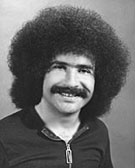
Tedd Webb in 1973
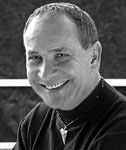
Tedd Webb now
Published Dec. 30, 2016
By: Mike Merino
Over the years, the Tampa Bay radio scene has had its share of great ones who have come and gone. But amidst the sea of countless music and talk show personalities that permeate that magical box on the dashboard of our cars and home stereo systems, few have stood the test of time as successfully as WFLA 970 radio host Tedd Webb. His name and voice have been a mainstay in Tampa`s nationally recognized, and always growing, entertainment market. His social and intellectual impact on our community is immeasurable. This talented media star has been shinning strong for over 53 years, and there`s no glimpse of retirement in his future. I sat down with Tedd to get some of his thoughts on his illustrious media career and the state of radio`s future.
Why did you choose a career in radio?
I was singing with a band for two years, but my voice started cracking and they kicked me out. I was 14 years old at the time. A friend, John Madiedo, told me WALT radio station was having a “contest” and if you won, you could be a disc jockey on weekends. I went to the station for the so-called “contest,” which turned out to be an audition for a weekend slot. I didn’t get the job. I was pitted against a bunch of 20- and 21-year old guys with experience. I saw the guy on the air working in an air-conditioned room – we didn’t have AC at my house growing up. He had 10 phones loaded with young ladies calling in requests, AND there was no heavy lifting: BINGO! I found what I wanted to do for life. I hung around the station and Paige Kinsey, one of their weekend guys, gave me “hi time” and instructed me on how to run the board [controls] and how to ready commercials. He would tape me after the station went off the air and allowed me the chance to learn. Before long, I became one of their high school correspondents [Jesuit High], and from there to a weekend slot. The rest is history. Here I am 53 years later.
What’s been your most significant radio accomplishment?
In 1986 I was awarded the Toastmasters International Communicator of the Year. I took a nun, Sister Rosalie, as my date that night to receive the award. She inspired me to be a public speaker when I was going to school at St Joseph’s. She forced me to give five-minute speeches, while others were only given a two-minute assignment. I owe everything to her!
Who was the craziest celebrity you ever interviewed? What did he/she do that was so memorable?
National Football League bad boy John Matuzak, who is now deceased but was 6’8” and 275 pounds, showed up at the radio station with a girl whom my mom used to babysit. Her name was Eileen, but she was going by Candy then. When he found out we knew each other he got jealous and threatened to kick my ass. Because of the massive amounts of steroids he was taking, he thought she was an ex-girlfriend of mine. We went to commercial break for eight minutes before the situation was settled. WOW, that was a close one!
Has social media changed radio?
We at the station are doing a great job with social media. It has become the focus of what we do; the on- air stuff is secondary nowadays. Our streaming numbers are through the roof and we utilize the Internet as much as possible. We have adapted rather well and use Twitter and Facebook a lot to promote the show and other interests that I have.
Where do you see radio in 20 years?
I think radio is shrinking in influence. Young kids don’t rely on the radio to determine what is hip – they get that from social media and other sources. They download their music from the Internet; they don’t sit around waiting for the same seven songs to be played every 63 minutes. Radio is a compacting business, not expanding. When Rush Limbaugh is heard on 600-plus radio stations, it means he’s put 600-plus announcers out of work. Glenn Beck, Sean Hannity, Michael Savage, etc. – do the math, that’s a lot of announcers replaced by syndication. On the music end, there are voice-over DJs. One guy gets off the air, goes into another studio and does voice tracking for four or five other stations across the country. There goes another four or five jobs. Not a good sign for the future if you are starting out in the biz.
What is your advice for young people entering the industry?
I tell them not to get in the business. Why? It’s like pro athletes. Only a handful of the many who try are going to make it. Go to school. Earn a degree in a profitable field with a future. I warned my son Lee eight years ago NOT to get into the biz. He didn’t listen. Here he is eight years later, still working part-time, with little chance of promotion. He is reconsidering his career choice right now. Go to school or learn a trade, but broadcasting is not one of those fields I would recommend to anyone.
Silhouettes presents Shelby Bender
Silhouettes: by Tiffany Razzano
published 2/10/2017
An eighth-generation Plant City resident, Shelby Bender remembers the exact moment she recognized the importance of community.
As an elementary school student, one of the teachers would enlist the help of local children to collect money for the American Heart Fund. Bender and her sister were selected one year and helped that teacher for as long as she can remember. Dressed in their Sunday finest, the group of students went door to door, asking their neighbors to donate to the cause. Afterward, they’d meet at the TECO community center for refreshments and to discuss how much they collected. “That was probably the start of my being active in the community,” said Bender, executive director and president of the East Hillsborough Historical Society. “I’ve always been passionate about giving back.”
Aside from spending a few years in Gainesville while her husband attended college, Bender has spent her entire life in Plant City. “Some people have real strong roots somewhere and they’re well established,” she said. “I’m one of those people.”
When she and her husband returned to their hometown, they took over the dry-blend fertilizer manufacturing company his family had owned and operated for decades in Plant City. Though she went on to earn her associate degree from Hillsborough Community College while her children were little, she decided not to pursue a bachelor’s degree at the time. “I had my full-time job with the family business. I was happy with what I was doing and the family was comfortable,” she said.
Then, after running the business for 30 years, Bender and her husband decided to shut down the manufacturing plant. The company had been in existence for 81 years. “At one point in time, Hillsborough County was a very large agricultural community,” she said. “But things change.” Forty years ago, there were “eight or nine dry-blend fertilizer companies” in the county, she added. “Now there are none.” Her family’s company at one time had been located in the heart of the city, near the railroad tracks, but Plant City’s midtown expansion forced them out.
Bender was 56 years old when the company closed down. “We had to reinvent ourselves and start over,” she said. “Sometimes in life you just have to write a new chapter.”
She decided to go back to school and complete her degree, earning a bachelor’s degree in general studies from St. Leo University and, later, a certificate in nonprofit management from the University of South Florida. She also worked for a year as finance secretary for Mulberry High School.
Even while running the company with her husband, she was always heavily involved with community activities, spending much of her time volunteering for the East Hillsborough Historical Society. Running her own business gave her the flexibility to spend a significant amount of time with the historical society. In fact, for years she was in charge of many of the duties she takes on today as executive director and president of the group. “When you own your own business, you can make your own hours,” Bender explained. “But I no longer had that flexibility while working for the school.”
So she and the historical society decided to get creative. The group always had an administrative person working part-time in the office. When that role opened up, they decided to revamp it, creating the executive director position for Bender. “I wanted to do this and I knew I could do this,” she said. “We just had to approach the role a little differently.”
As executive director, she works out of the historic 1914 Plant City High School Community Center – her former junior high school – which houses the EHHS office, Pioneer Museum and Quintilla Geer Bruton Archives Center.
Bender has always been interested in local history, as well as genealogy. She remembers as a young girl her grandmother telling her about their family history. “She was very influential. My own interest in our family history just kind of went from there,” she said.
Learning about her family, “who they were in reality, what they did, what kind of people they were,” connected her to her roots and strengthened her sense of self.
She’s traced her family lineage as far back as the 1600s, to England, Scotland, Germany and Russia. “As you keep going back, you develop an interest not just in local history, but in history throughout time,” she said.
She added, “It’s really interesting to see how they existed. A person might think we’re in hard times now, but no, we’re not in hard times.”
She’s also built up a roster of private clients, especially in the realm of adoption research. For nearly 25 years, Bender has worked with adoptees and birth families to make connections.
Bender has also co-authored four books on Plant City history and Tampa cemeteries. In fact, in addition to genealogy and family histories, her other specialties include historic preservation, the history and care of cemeteries and funerary art. “A cemetery is a true history of a community,” she said.
She serves on several other local organizations as well. She is chair of the Plant City Historic Resources Board. The board oversees three local and national register historic districts. She also serves on the Hillsborough County Historic Preservation Grant Panel and the Plant City Main Street Board of Directors, and is secretary of the Florida State Genealogical Society. And as a nearly nine-year member of the Hillsborough County Historic Advisory Council – and recently member emeritus – she’s helped establish numerous historic markers throughout the county by recommending and finding sites with historical importance to the community. Some of these locations include the Hillsborough County Cemetery, which served as a pauper’s cemetery, and Florida College in Temple Terrace.
The EHHS also hosts numerous events throughout the year in an effort to reach out to the community. They organize Pioneer Heritage Day each November, holding an open house at the 1914 Plant City High School Community Center. The organization is also gearing up for their upcoming fundraiser, one of their biggest of the year, Bender said, running a strawberry shortcake booth at the Florida Strawberry Festival.
In addition, the group sponsors and runs a number of workshops for the community, from genealogy to cemetery care and preservation. The next workshop is “Copyright Workshop for Authors, Artists and Musicians,” to be held Saturday, Feb. 4, 10 a.m. to 1 p.m., at the 1914 Plant City High School Community Center. The workshop is free and preregistration is required.
Then, on Saturday, Feb. 11, 7 to 10 p.m., the center will host the Florida Opry’s Country to Pop tribute show to country music legend Patsy Cline.
The organization tries to reach the community any way that it can, Bender remarked. “It’s important that we all remember where we came from,” she added.

Silhouettes presents Jim Webb
By: Tiffany Razzano
Originally appeared in the July 8, 2016 edition of La Gaceta Newspaper
Musician. Actor. Swing Dancer. Pilot. Marksman. Photojournalist.
Jim Webb is used to wearing many hats. “I’ve lived four lives in one so far, easily,” he said.
But these days he has honed in on just one passion: growing his business, The Webb Works. With an ear for storytelling, Webb specializes in producing legacy and web-based videos for businesses, governments and families. So he’s pushed his other talents and interests to the side for the time being to focus on sharing these stories. “Everybody’s got a story and I love helping people tell it,” he said.
Still, his varied interests come in handy whenever he’s trying to connect with the individuals who are featured in his videos. “I’m rarely not able to find common ground with people,” he said. “And as a photojournalist, I’ve had the opportunity to be out and meet different people, and I use these skills in my business and to connect with people. I’ve learned to draw people out. I have at least a little bit of capacity for showing interest [in others] and getting people’s stories, because everybody has one. It all plays right into my curious nature.”
Webb grew up in Cleveland, Ohio. As a child, his mother enrolled him and his siblings in music lessons. In high school, he went on to join the marching band, performing in the brass section. He was also an athlete, lettering in tennis, cross country track and swimming.
He went on to study at Kent State University where he joined the marching band, was a diver on the swim team and also a member of the cheerleading team. “Boy was that a smart move on my part,” he said. “I got to be around some of the most beautiful women on campus. And when we went to other colleges, I got to be around some of the most beautiful women on their campus.”
During the summer of 1973, he headed to Wisconsin to perform with the legendary Madison Scouts Drum and Bugle Corp. That’s all it took for him to be “hooked” on drum corp. He performed with them through 1975, his last year of eligibility since he had turned 21. But that year the group was the undefeated Drum Corp International. He stayed on as an instructor for an additional five years. “It’s an art form,” he said, “and I haven’t seen a single marching band in high school or college that wasn’t affected by it.”
Decades later, his time with the Madison Scouts still affects him. “I draw on that daily for inspiration,” Webb said.
An avid photographer since a high school student – he borrowed his mother’s Kodak Instamatic camera as a teen “and she never saw that camera again” – he was offered a job taking photos for an NBC affiliate in Madison. After five years, he moved to Toledo, Ohio to take a job as a news photographer for the PBS station there and also to be closer to home.
In 1984, he accepted a position as photojournalist for WFLA News Channel 8. “I was in the news department there, shooting news on film, long before video cameras and live trucks and all of that,” he said. After a year and a half, he was promoted to chief photographer, overseeing special projects and the department. It was a time of growth at the station, he said. Staff doubled and the station added a number of special shows and weekend editions.
Webb has also remained involved with his many passions since moving to Tampa. He’s served as chairman of the board for the Suncoast Sound Drum and Bugle Corps and volunteered to work with the Robinson High School marching band.
He took up swing dancing, something he learned as a child, and not only did he frequent local swing dance events, he taught it as well for several years.
He continued to play music, forming a band – a 12-piece rhythm and blues revue – with other journalists for the Society of Professional Journalists’ Battle of the Media Bands, which raised money for its minority scholarship.
He took flying lessons after years of flying radio-controlled planes and spending time up in the air as Channel 8’s primary photographer. He even went on to fly with the Blue Angels. And because of a video he shot for a friend, he developed an interest in skeet and trap shooting, becoming a decent marksman.
Webb is also an actor and does voiceover work. He’s the official voice of the Tampa Bay Arts Center Entertainment Network. He’s appeared on stage at Ruth Eckerd Hall in productions including “Guys and Dolls” and “South Pacific.” He also appeared in the short film “The Wallet,” which was selected for the Gasparilla International Film Festival. (Several other films he’s filmed himself have appeared at the film fest as well.)
All the while, he worked for Channel 8. Working for the news station, he traveled the country – sometimes the world. “I got to tell stories and meet the most interesting people in the places that I’ve worked and get paid for it,” he said. He’s met everyone from actors to national leaders, from James Earl Jones to President Barack Obama and Colin Powell. He’s travelled around the country and to places such as the Kremlin, in Russia, and the Andes Mountains. “The list goes on and on. I’ve had many, many brushes with greatness. That camera has been my passport to travel to many places and do things I never would have done.”
But it wasn’t all fun for Webb. He also had to cover difficult stories about death and violence. “I’ve seen the very best and the very worst of the human condition from behind my camera,” he said. He recalls that when working in Toledo, every spring as the Toledo River thawed, a body would come floating to the surface. He’d inevitably have to cover this news. “I’ve recorded things, I saw things that I wouldn’t wish on anybody,” he said.
This is part of the reason he decided to leave the news business and create The Webb Works to focus on legacy and corporate videos. He wanted to make videos that told happy stories and touched people.
He recalls a series on aging that he filmed while working for PBS in Toledo. “I knew then that some of the people I was recording wouldn’t be around in 10 years,” he said. That’s how he realized the importance of preserving people’s stories. “You don’t want to wait until it’s too late. You want to get the twinkle of their eye or the sound of their laughter before you can’t. Those are the treasures”.
While he creates videos for corporate entities such as Tampa General Hopsital, WellCare and the University of South Florida, “the legacy videos are what I live for,” he said. “When I get my chance to sink my teeth in a good story, I want to record it. And there’s a lot of them slipping away from us.”
Webb currently operates out of a studio space on West Shore Boulevard. He’s recently teamed up with a film photographer, Hallie Ladd Heck, who also rents space in the same building. The pair are building out a larger, 1,400-square-foot studio with a green room and meeting space. He’ll be able to offer photography classes and swing dance lessons in the larger, open space. “It’s going to be really nice when we’re done in a few weeks,” he said. “There are so many possibilities.”
He’s also writing a book. It’s part memoir, sharing his life story, and part encouragement for others to pursue their passions. “I’ve been fortunate enough to do this my entire life,” he said. When he meets college students, he has one piece of advice for them: “Do what you liked to do as a child. If you do your passions, then you’ll never work another day in your life.”
He added, “Then I like to modify that a little bit. I tell them to do what you did as a kid that got you into trouble, but kept doing anyway.”